1.Structural features:
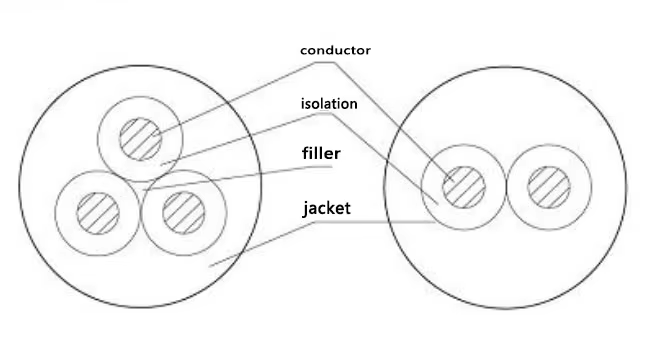
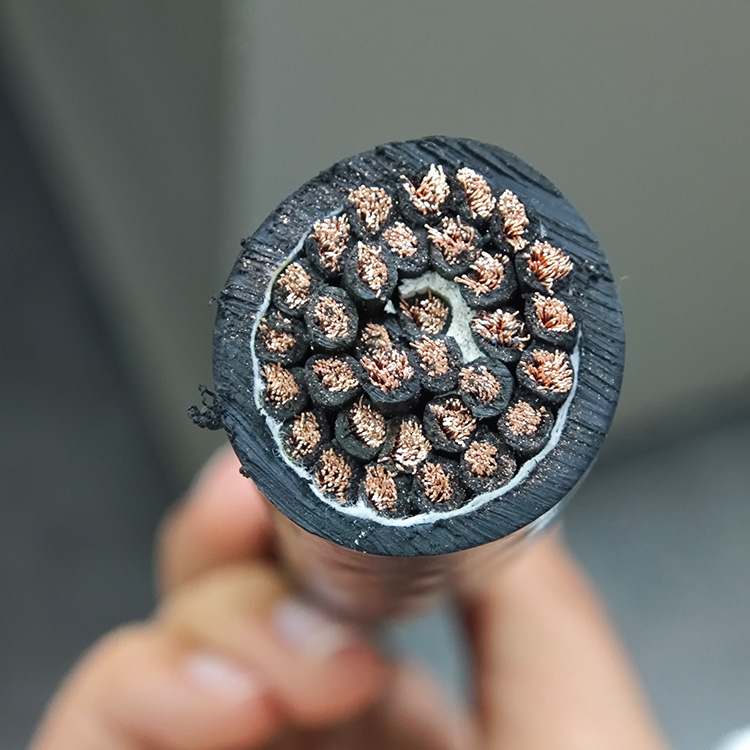
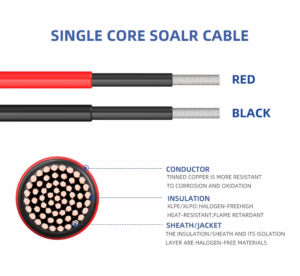
(1)Conductor: made of high conductivity copper or aluminum to ensure efficient transmission of electrical energy.
(2)Insulation: made of special materials with excellent electrical insulation properties and mechanical strength, as well as the ability to resist the erosion of the cable by harsh environments.
(3)Sheath: made of weather-resistant materials, such as low-smoke, halogen-free, flame-retardant polyolefin, to provide additional protection against damage to the cable in outdoor environments.
2.Category
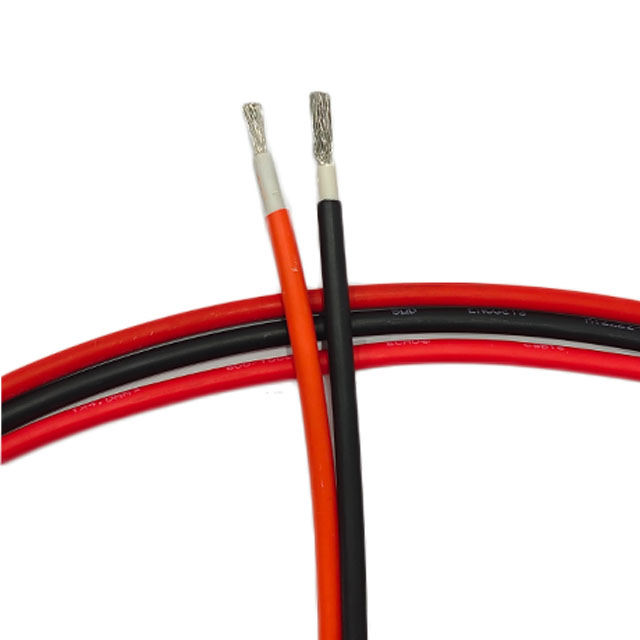
(1)DC cable: used for DC power transmission between solar panels and inverters, such as PV1-F-DC PV cable.
(2)AC cables: for AC power transmission between the inverter and the grid or load, such as PV1-F-AC photovoltaic cables.
(3)Other special cables: e.g. cables for internal connection of converter boxes, cables for grounding protection, etc.
3.Performance advantages
(4)Efficient transmission: optimized conductor structure and insulation materials ensure efficient transmission of electrical energy and reduce energy losses.
(5)Strong weather resistance: the sheath and insulation made of special materials can resist the erosion of the cable by the harsh environment and prolong its service life.
(6)Safe and Reliable: Comply with international safety standards and certification requirements to ensure the safety and reliability of the cable in use.
4.Solar Cable Product Applications
Solar cables are widely used in solar power generation systems of all sizes, including large-scale terrestrial power plants, photovoltaic systems installed on household and commercial roofs, and power supply line connections in industrial applications. The following is a detailed description of specific application areas:
(1)Large ground-mounted power stations
Solar cables are one of the key components in building large ground-mounted solar power plants. These cables need to withstand harsh environmental conditions, such as high temperatures, cold, UV radiation, etc., while ensuring the stable transmission of power.
In large-scale ground-mounted power plants, solar cables are typically used to connect key equipment such as solar panels, convergence boxes, inverters, and power grids.
(2)Home and commercial roof-mounted PV systems
In distributed, small-scale PV systems installed on the roofs of homes and commercial buildings, solar cables are responsible for transmitting the electricity converted from the sun’s rays from the panels to the inverter or meter.
These cables need to be flexible and weatherproof enough to adapt to the complexity and diversity of the roof environment.
(3)Power line connections in industrial applications
High-quality solar cables are also used between large photovoltaic installations used in industrial environments to ensure stable operation of the power system and safe and reliable data transmission.
These cables often need to have higher electrical properties and mechanical strength to meet the specific requirements of industrial environments.
(4)Other application areas
In addition to the application areas mentioned above, solar cables can also be used in the wiring of lighting systems, the construction of electric vehicle charging stations, traffic signals and road lighting.
In these applications, solar cables can provide environmentally friendly and reliable energy solutions and reduce dependence on traditional energy sources.
| No. Of cores x Construction | Conductor | Outer Diameter | Resistance Max.(Ω/km) | Current Aarring Capacity |
| (mm2) | Construction(n / mm) | (mm) | (A) | |
| 1*1.5 | 30/0.25 | 4.9 | 13.3 | 30 |
| 1.2.5 | 50/0.25 | 5.45 | 7.89 | 41 |
| 1*4 | 56/0.3 | 6.1 | 4.75 | 50 |
| 1.6 | 84/0.3 | 7.2 | 3.39 | 70 |
| 1*10 | 142/0.3 | 9 | 1.95 | 98 |
| 1*16 | 228/0.3 | 10.2 | 1.24 | 132 |
| 1*25 | 361/0.3 | 12 | 0.795 | 176 |
| 1*35 | 525/0.3 | 13.8 | 0.565 | 218 |
| 1*50 | 720/0.3 | 14.8 | 0.393 | 280 |
| 1*70 | 988/0.3 | 16.9 | 0.277 | 350 |
| 1*95 | 1349/0.3 | 18.7 | 0.21 | 410 |
| 1*120 | 1691/0.3 | 20.7 | 0.164 | 480 |

 English
  Chinese
  Russian
  French
  Arabic
  Indonesian
  Spanish
  Portuguese