一、Structural components
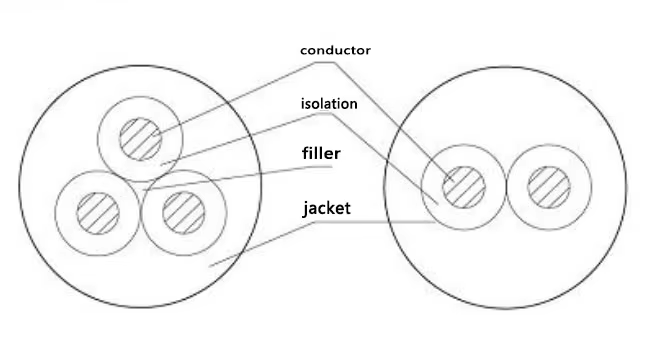
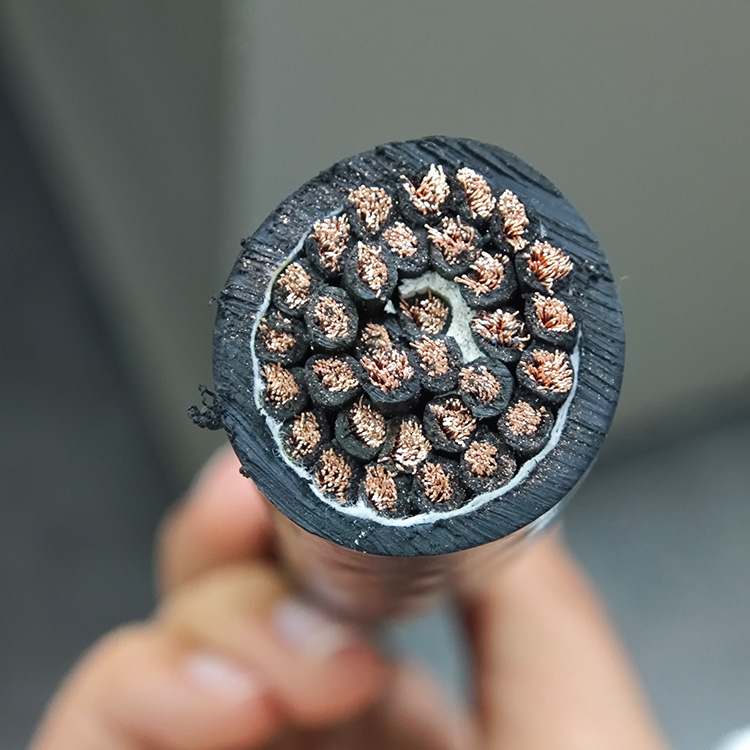
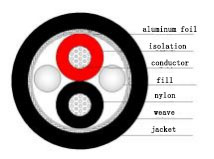
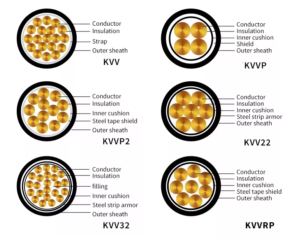
1.Core (conductor): As the core part of the power cable, the core is mainly responsible for the transmission of electrical energy. It consists of one or several wires stranded precisely, and the material and cross-section size have a decisive influence on the electrical performance and transmission capacity of the cable.
2.Insulation: Immediately adjacent to the outside of the core, its role is to isolate the core from the earth and other cores electrically, thus ensuring that the power can be safely and stably transported. The material and thickness of the insulation layer is a key factor affecting the electrical safety and service life of the cable. Common insulating materials include polyvinyl chloride (PVC), cross-linked polyethylene (XLPE) and so on.
3.Shield: Designed to optimize electric field distribution and reduce tangential stresses within the cable. For multi-core cables, the shield also helps to enhance the overall stability of the cable and reduce the effects of electromagnetic interference.
4.Protective layer: As the outermost layer of the cable, the main task of the protective layer is to resist the erosion of external environmental factors, such as mechanical damage and chemical corrosion, so as to ensure that the cable can operate stably for a long time.
Filler structures and tensile elements: In some specific types of power cables, these structures are incorporated to enhance the mechanical strength and durability of the cable.
二、Classification
1.Classification by voltage level: The voltage level of the cable is U0/U (kV), including 6/10, 8.7/10, 21/35 and many other types.
2.Classified by the number of conductor cores: power cables have several options such as single-core, two-core, three-core, four-core and five-core.
3.Classification by insulation materials: mainly including rubber-plastic insulated power cables (such as PVC insulated, cross-linked polyethylene insulated and ethylene-propylene rubber insulated power cables, etc.) and paper-insulated power cables (including viscous oil-paper insulated and non-drip oil-paper insulated power cables) and so on.
一、Structural components
1.Core (conductor): As the core part of the power cable, the core is mainly responsible for the transmission of electrical energy. It consists of one or several wires stranded precisely, and the material and cross-section size have a decisive influence on the electrical performance and transmission capacity of the cable.
2.Insulation: Immediately adjacent to the outside of the core, its role is to isolate the core from the earth and other cores electrically, thus ensuring that the power can be safely and stably transported. The material and thickness of the insulation layer is a key factor affecting the electrical safety and service life of the cable. Common insulating materials include polyvinyl chloride (PVC), cross-linked polyethylene (XLPE) and so on.
3.Shield: Designed to optimize electric field distribution and reduce tangential stresses within the cable. For multi-core cables, the shield also helps to enhance the overall stability of the cable and reduce the effects of electromagnetic interference.
4.Protective layer: As the outermost layer of the cable, the main task of the protective layer is to resist the erosion of external environmental factors, such as mechanical damage and chemical corrosion, so as to ensure that the cable can operate stably for a long time.
Filler structures and tensile elements: In some specific types of power cables, these structures are incorporated to enhance the mechanical strength and durability of the cable.
二、Classification
1.Classification by voltage level: The voltage level of the cable is U0/U (kV), including 6/10, 8.7/10, 21/35 and many other types.
2.Classified by the number of conductor cores: power cables have several options such as single-core, two-core, three-core, four-core and five-core.
3.Classification by insulation materials: mainly including rubber-plastic insulated power cables (such as PVC insulated, cross-linked polyethylene insulated and ethylene-propylene rubber insulated power cables, etc.) and paper-insulated power cables (including viscous oil-paper insulated and non-drip oil-paper insulated power cables) and so on.

 Chinese
  English
  Russian
  French
  Arabic
  Indonesian
  Spanish
  Portuguese